Japanese pottery tools are the bamboo, wood and spring steel hand tools that grew up around the Japanese wheel: the gyubera rib, the tombo gauge, the kanna trimming blade, the yumi rim cutter and the egote throwing stick. They are simple, cheap and very good at one job each. This guide compares eight of them that US potters can actually buy, using maker pages and US dealer listings. It is research-based; we did not throw or trim with these tools ourselves.
One thing to know first: very few of these tools say "made in Japan" on the listing. Most are Japanese-style designs from makers outside Japan, and we say where each one comes from when the maker publishes it. For the styles and techniques these tools were made for, such as hakeme, tobikanna and kurinuki, see our guide to Japanese pottery techniques.
Quick picks
- Best gyubera: Bamboo Tools Bamboo Gyubera (bamboo "cow's tongue" rib in four sizes)
- Best from a Japanese company: Shimpo Japanese Style Gyubera (hardwood, long or short, three widths)
- Best tombo: Bamboo Tools Tombo Gauge T001 (seven-piece bamboo gauge set)
- Best kanna: Bamboo Tools Steel Kanna Trimming Tool M001 (8 in, two angled blades)
- Best kanna-style tool from a US maker: Mudtools Do-All Trim Tool (kanna spade plus loop)
- Best yumi: Bamboo Tools Wide Bamboo Wire Yumi YM03 (taut wire on a bamboo bow)
- Best egote-style throwing stick: Bamboo Tools Hook Throwing Stick S003 (11 in or 16.5 in)
- Best chatter tool: Bamboo Tools Jumping Iron M010 (flat-end tobikanna blade)
Japanese pottery tools compared
| Tool | Japanese name | Material | Size (maker) | Main job | Typical price band | Buy |
|---|---|---|---|---|---|---|
| Bamboo Tools Gyubera | Gyubera | Bamboo | 5 x 2 in (BT001); 10.5 x 1.5 in (BT003) | Shaping and compressing bowls and plates | $17 to $28 | Check price |
| Shimpo Gyubera | Gyubera | Hardwood | Long or short; large, medium, small | Deep walls and bowl interiors | Not captured | Check price |
| Bamboo Tools Tombo T001 | Tombo (tonbo) | Bamboo | 7 pieces; size not published | Measuring width and depth for sets | $30 to $35 | Check price |
| Bamboo Tools Kanna M001 | Kanna | Rustproof steel | 8 in | Trimming tight feet and thin pieces | $7 to $10 | Check price |
| Mudtools Do-All | Kanna-style | Steel | Not published | Trimming feet, detail | $22 to $30 | Check price |
| Bamboo Tools Yumi YM03 | Yumi | Bamboo and wire | 3.25 x 5 in | Leveling rims, faceting | $7 to $12 | Check price |
| Bamboo Tools Hook Stick S003 | Egote style | Bamboo | 11 in; long 16.5 in | Tall and narrow-necked forms | $11 to $17 | Check price |
| Bamboo Tools Jumping Iron M010 | Tobikanna | Springy metal | 8.5 in | Chatter patterns | $19 to $21 | Check price |
Price bands are what we saw at maker stores and US dealers in October 2026. These tools sell mostly through pottery suppliers, so the Amazon button may show a search rather than one listing. Check the live price before you buy.
1. Bamboo Tools Bamboo Gyubera: best gyubera
The gyubera is the tool most people mean when they say Japanese throwing rib. Ceramic Arts Network describes it as a J-shaped wooden rib with a slightly curved surface, named "cow's tongue" after its outline, and traditionally used by potters in Arita and Karatsu for large platters and deep bowls. The curved tip works inside the pot in place of your inside hand, and the angle you hold it at sets the profile of the bowl.
Bamboo Tools sells four versions. The standard Bamboo Gyubera (BT001) is about 5 x 2 in and is the size for cereal bowls and small plates. The Long Bamboo Gyubera (BT003) is 10.5 x 1.5 in for deeper forms, and there are wide and long-wide versions for flatter plates. The maker calls them sled-shaped tools for shaping and compressing wheel-thrown bowls and plates.
Bamboo Tools argues that bamboo resists water better than wood and does not need oiling, and says it will not go soft or warp after long soaking. That is the maker's claim, not a lab result, but it matches why bamboo is used for throwing tools in the first place. Bamboo Tools gives a mailing address in Surrey, British Columbia, and does not publish where the tools are made.
- Sizes: BT001 5 x 2 in; BT003 long 10.5 x 1.5 in; wide and long-wide versions also sold
- Material: bamboo
- Use: shaping and compressing bowl and plate interiors on the wheel
- Origin: not published by the maker (Canada-based seller)
Pros
- The classic bowl tool at a low price
- Four sizes
- Bamboo shrugs off water
Cons
- Takes practice to use in place of your hand
- No left-hand version listed for the gyubera
Who should skip it: brand-new throwers who are still learning to center and open. Learn the basics with your hands and a sponge first (our wheel throwing guide walks through them).
2. Shimpo Japanese Style Gyubera: best from a Japanese company
If you want your Japanese pottery tools to come from a Japanese brand, Shimpo is the one most US dealers carry. Shimpo was founded in Japan and is owned by the Nidec group; our Shimpo wheel guide covers the company. Sheffield Pottery lists a "Shimpo Japanese Style Potter's Tools" range and describes the wooden gyubera (it spells it Gyobera, code WCT-C15-1) as a tool that shapes the wall and compresses the base of a thrown piece.
UK dealer Potclays shows the whole Shimpo line and gives more detail than US listings do. The gyubera comes in long and short lengths, each in large, medium and small widths, and Potclays calls the range hardwood. The same line includes Kigote hook throwing sticks, a Kigote throwing disc for bases and Kigushi combs for texture. No listing we found says where the tools are manufactured, so "Shimpo" tells you the brand, not the factory.
The trade-off is information: US listings showed no dimensions or item prices when we checked, so ask your dealer for the length before you order.
- Sizes: long or short, each large, medium or small (Potclays); exact dimensions not published
- Material: hardwood (Potclays); wooden (Sheffield)
- Codes: WCT-C15-1 gyubera, WCT-C16 combs (Sheffield)
- Origin: Japanese brand; place of manufacture not published
Pros
- A Japanese brand with US support
- Six sizes
- Matching sticks and combs in the same line
Cons
- Dimensions and US prices hard to find
- Wood needs drying after use
Who should skip it: buyers who want to see exact sizes and prices before ordering; the Bamboo Tools gyubera publishes both.
3. Bamboo Tools Tombo Gauge T001: best tombo
A tombo (also written tonbo; both mean dragonfly) is a light gauge that hangs over a pot on the wheel. Ceramics Monthly describes the method: lower the vertical stick until its point touches the center, slide the crossbar so its end touches the outer wall, and the tool is set. Every pot after that can be thrown to the same width and depth, which is why Japanese production potters keep several preset tombo beside the wheel.
The Bamboo Tools Tombo Gauge T001 is a seven-piece bamboo set, and the maker says it measures the diameter and depth of bowls, cups and plates so you can make a series with the same basic dimensions. Bamboo Tools does not publish the size of the pieces. Canadian dealer Pottery Supply House lists the same seven-piece T001 set.
A tombo is the most useful Japanese tool for anyone making sets of mugs or bowls. It is lighter and quicker than a caliper on a spinning pot, though less precise for lids; our pottery calipers guide covers that job. If you want to try the idea first, Ceramics Monthly shows a tombo made from two chopsticks and small rubber bands.
- Pieces: 7
- Material: bamboo
- Measures: width and depth of bowls, cups and plates
- Size: not published by the maker
Pros
- Fast way to throw matching sets
- Light enough to hang over a spinning pot
- Several presets in one set
Cons
- Sizes not published
- Not precise enough to fit lids
Who should skip it: potters who make one-off pieces and never throw to a size.
4. Bamboo Tools Steel Kanna M001: best kanna
A kanna is the Japanese trimming tool. Ceramics Monthly explains the key difference from a Western loop tool: a kanna is open, a bent strip of steel rather than a closed loop, so it gives you more edges. The inside of the crook finds the center of a foot, the outside planes a surface, and the outermost edge can chatter. Many potters make their own from steel strip; the article suggests strip about 0.8 mm thick.
If you would rather buy one, the Bamboo Tools Steel Kanna Trimming Tool M001 is 8 in long, made from what the maker calls rustproof steel, and has an angled blade of a different size on each end. Bamboo Tools says it suits tight foot rings and thin pieces, and also works for carving, sgraffito and scraping off excess glaze. M002 to M004 are other blade shapes at the same price. Clay-King also stocks a 7 in Bamboo Tools steel kanna knife (M006) with a single sharp point.
A kanna edge is thin and works best on firm leather-hard clay. Our trimming tools guide covers when clay is ready and how kanna compare with replaceable-blade trimmers such as DiamondCore.
- Length: 8 in (20.3 cm)
- Material: rustproof steel (maker)
- Blades: two angled ends of different sizes
- Other shapes: M002, M003, M004; 7 in M006 knife at Clay-King
Pros
- Two blade sizes for under $10
- Rustproof
- Also carves and cleans glaze
Cons
- Thin strip needs a light touch
- Sharpening is up to you
Who should skip it: beginners who want a chunky handle and a blade that never needs filing; a DiamondCore T1 suits them better.
5. Mudtools Do-All Trim Tool: best kanna-style tool from a US maker
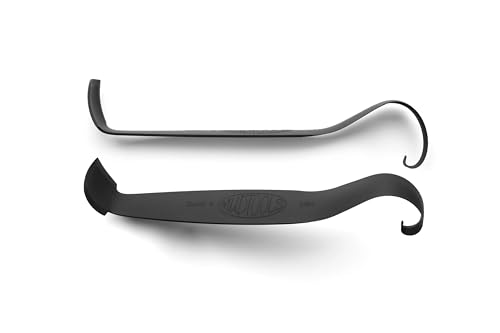
Some of the best "Japanese" pottery tools sold in the US are Western tools built on Japanese ideas. Mudtools founder Michael Sherrill based the Do-All on kanna trimming tools he saw in Japan in the 1980s. One end is a sharpened spade that works like a kanna around a foot; the other curls into a loop for smoothing and detail.
The appeal over a bare steel kanna is the handle, which is easier to control for potters used to loop tools. It also comes in the Mudtools Essentials starter kit. Mudtools recommends wiping it with wax or oil after use and publishes a sharpening guide, so treat it as a tool you look after rather than replace. Mudtools does not publish its dimensions or steel type. More on the brand is in our Mudtools review.
- Design: kanna-style spade blade plus curled loop end
- Maker SKU: MT-12-01
- Dimensions: not published by the maker
- Care: wipe with wax or oil; sharpen per the maker's guide
Pros
- Kanna-style cutting with a comfortable handle
- Two shapes in one tool
- Widely stocked
Cons
- About three times the price of a steel kanna
- Needs oiling and sharpening
Who should skip it: anyone who wants the traditional open steel strip; buy the M001 instead.
6. Bamboo Tools Wide Bamboo Wire Yumi YM03: best yumi
Yumi means bow, and the tool is exactly that: a bent strip of bamboo holding a taut wire. Because the wire is tight and short, it cuts straighter than a loose cut-off wire. The Ceramic Shop lists three jobs: trimming uneven rims on pots still on the wheel, faceting, and cutting even beveled edges on moist or leather-hard slabs. It can also flatten the sides of round forms.
The Bamboo Tools Wide Bamboo Wire Yumi (YM03) measures 3.25 x 5 in, and the maker says it gives clean cuts on thick, soft clay. Bamboo Tools also sells smaller wire yumi (sold out when we checked), coiled versions that leave a textured cut, and an all-steel yumi. The Ceramic Shop stocks a 3.25 in bamboo yumi, 5 in long, under its Bamboo Tools category.
For a beginner, the rim job alone earns its place: a yumi held flat across a wobbly rim levels it in one pass.
- Size: 3.25 x 5 in (8.3 x 12.7 cm)
- Material: bamboo bow with taut wire
- Jobs: leveling rims, faceting, beveling slabs
- Variants: small and medium wire, coiled wire, steel
Pros
- Straight, even cuts
- Cheap
- Coiled versions add texture
Cons
- Wire span limits how thick a wall it can facet
- Wire material not stated
Who should skip it: potters who already level rims well with a needle tool and never facet.
7. Bamboo Tools Hook Throwing Stick S003: best egote-style stick
The egote is a Japanese throwing stick for the inside of narrow forms. Pottery Making Illustrated describes it shaping the interior of tsurukubi flower vases and tokkuri sake bottles: you throw a cylinder, collar the neck, then slide the wet hook inside and swell the belly from below while your other hand supports the outside. It lets you shape a space your hand cannot reach.
Bamboo Tools sells this as the Bamboo Hook Throwing Stick (S003), 11 in long, for shaping and compressing tall, deep and narrow-necked pots. A 16.5 in long version suits taller vases, and a club-shaped stick handles rounder interiors. The maker does not use the word egote, but the job is the same. Shimpo's Kigote hook sticks, sold in large, medium and small, are the hardwood alternative.
- Length: 11 in (28 cm); long version 16.5 in (42 cm)
- Material: bamboo
- Use: shaping and compressing tall, narrow-necked pots
- Related: club throwing stick in standard and long
Pros
- Opens up bottle and vase shapes
- Bamboo handles long soaking
- Two lengths
Cons
- A technique to learn, not a quick fix
- No published left-hand version
Who should skip it: potters who make open forms only, such as bowls, plates and mugs.
8. Bamboo Tools Jumping Iron M010: best chatter tool
The jumping iron is the tool behind tobikanna, the rhythmic chatter pattern on Japanese folk pottery. Held lightly against a leather-hard pot on the wheel, the springy blade bounces and nicks the surface in a repeating pattern. Bamboo Tools says the technique was first used in China around the twelfth century and appears in Japanese folk kilns from the eighteenth century.
The Jumping Iron Chatter Tool with Flat End (M010) is 8.5 in long. Bamboo Tools describes using it on slipped pots so each nick exposes the contrasting clay underneath. Single-point and double-point versions make finer or doubled marks. The maker does not state the metal. The technique itself, including slip and speed, is covered in the tobikanna section of our Japanese pottery techniques guide, so here we only cover the tool.
- Length: 8.5 in (22 cm)
- End: flat; single-point and double-point versions also sold
- Material: springy metal (exact metal not published)
- Use: chatter patterns on leather-hard pots
Pros
- One of the few ready-made chatter tools
- Three tip styles
Cons
- A decorating tool only
- Metal type not stated
Who should skip it: potters who do not decorate on the wheel. A kanna can chatter too, with practice.
How to choose Japanese pottery tools
Japanese tools are cheap enough that the risk is buying a drawer full you never use. Start from what you make, then check where the tool comes from, what it is made of, and whether it suits your wheel direction.
Japanese-made or Japanese-style
Read listings closely. "Japanese pottery tools" in a US shop usually means Japanese-style: a traditional design, made by a company outside Japan or by a maker that does not say. Bamboo Tools lists a Canadian address and publishes no country of origin. Shimpo is a Japanese company, but its tool listings do not say where the tools are made. None of this makes the tools worse; it just means "authentic" should not be the reason you pay more.
Bamboo, wood or steel
Throwing tools (gyubera, sticks, tombo) come in bamboo or hardwood. Bamboo Tools says bamboo handles water better and needs no oil; hardwood tools like Shimpo's need drying after use and an occasional oil. Trimming and cutting tools (kanna, yumi, jumping iron) are steel or wire. Check whether the steel is rustproof, since a plain carbon steel kanna rusts if it goes back in the bag wet.
Which tools to buy first
- Bowls and plates: gyubera first, then a kanna for trimming the foot.
- Sets of mugs or bowls: tombo first. It saves more clay and time than any other tool here.
- Vases and bottles: hook throwing stick (egote style).
- Uneven rims or faceted forms: yumi.
- Surface decoration: jumping iron, after you can trim cleanly.
A sensible first order is one gyubera, one kanna and one yumi, which together cost about $35 to $50 from Bamboo Tools at October 2026 prices. Bamboo Tools also sells an 8-piece kit (PTK012) with a double-sided steel kanna, ribs, a wiggle wire and a pin tool, which we cover in our handmade and wooden pottery tools guide.
Wheel direction and left-handed potters
Japanese wheels traditionally turn clockwise, and many Western wheels turn counterclockwise. For symmetric tools like the tombo and yumi this does not matter. For edge tools it can: Ceramics Monthly notes that the trimming edge of a kanna depends on your handedness and wheel direction, and that you flip the edge for a clockwise wheel. Bamboo Tools says it offers mirrored shapes for left-handed potters on some tools, so ask before you order a gyubera or stick.
Western equivalents you may already own
A wooden rib does part of a gyubera's job, calipers do a tombo's, a loop tool does a kanna's, and a needle tool levels a rim. Buy the Japanese version when it does the job better, such as a tombo checking a spinning pot. Still building a basic kit? Start with our best pottery tools guide.
Where to buy in the US and in Japan
In the US, Bamboo Tools sells direct and through dealers such as Clay-King and The Ceramic Shop; Shimpo's tools are sold through Shimpo dealers such as Sheffield Pottery. Most of these tools are not reliably listed on Amazon. If you travel, the Sentomono blog lists Tokyo-area shops that sell tools: Tougei in Ikebukuro, Clay Art Takahashi in Tokyo, Ayari Pottery in Saitama and Tachibana in Chiba.
Care and safety
Rinse tools, dry them flat, and store kanna and jumping irons so the edges are covered; a thin steel strip cuts skin as easily as clay. Trimming makes piles of clay scraps that dry into dust. Wet-wipe your wheel and floor instead of sweeping, because dry clay dust contains silica. A tool roll or bag with pockets keeps sharp ends apart; our pottery tool bag guide compares them.
Sources: Bambootools.com home page, collections (gyubera and throwing sticks, tombo and gauges, kanna and jumping iron, yumi and wiggle wire) and product pages for the Bamboo Gyubera BT001, Long Bamboo Gyubera BT003, Bamboo Tombo Gauge T001, Steel Kanna M001, Jumping Iron M010, Wide Bamboo Wire Yumi YM03, Bamboo Hook Throwing Stick S003 and 8 Piece Pottery Toolkit PTK012; Bambootools "Why use bamboo" article; Sheffield Pottery Shimpo Japanese Style Potter's Tools page; Potclays Shimpo wooden tools page; Clay-King Bamboo Tools M006 listing; The Ceramic Shop Yumi Bamboo 3.25 in and Tombo listings; Pottery Supply House T001 listing; Ceramic Arts Network articles on gyubera, egote, kanna and tombo; Sentomono Tokyo tool shops article; Mudtools Do-All product data from our trimming tools guide. Research-based comparison, no hands-on testing. Specs checked October 2026.